April 2010
| Angkor Thom, meaning "Great City," is a 9-square-km walled, 12th-century capital of the Khmer Empire built by King Jayavarman VII. Located near Siem Reap, Cambodia, it is a major archaeological complex featuring the iconic Bayon Temple with its smiling stone faces, the Terrace of the Elephants, and other ruins. |
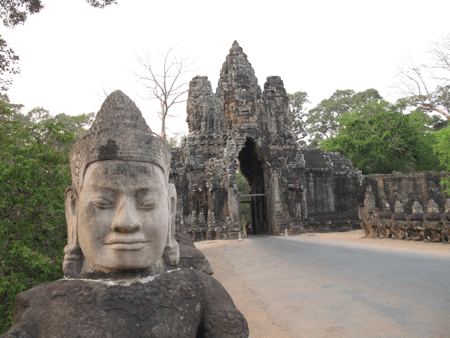
South Gate - Angkor Thom
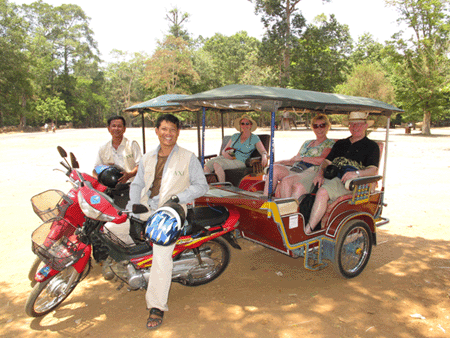
Our fleet of Tuk Tuks, with driver Som
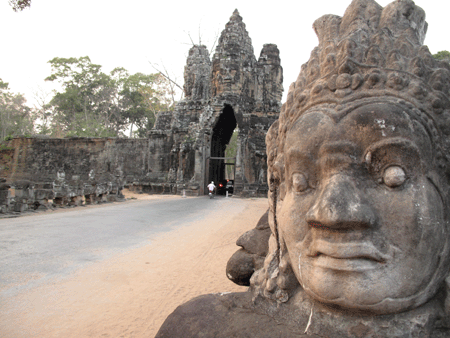
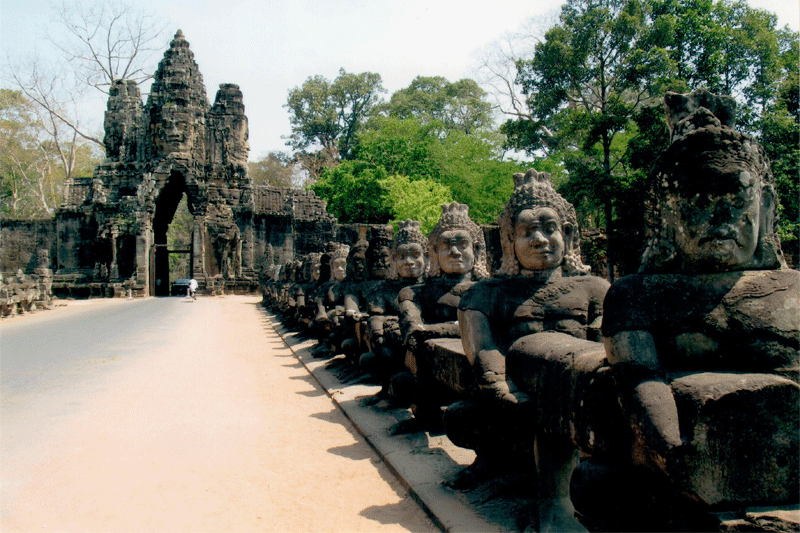
Right hand side of South Gate, Angkor Thom....
a row of asuras or demons, in contrast to the gods on the left
The Bayon Temple, which was constructed during Jayavarman VII’s reign, is unique as it is the only Buddhist state temple and the last to be built in the Angkor Empire (also sometimes called the Khmer Empire). While temples continued to be constructed during the Angkor period (9th–15th century), none were on the scale or harnessed the wealth and resources of the Bayon after the death of Jayavarman VII.
The temple is located at the center of the royal city of Angkor Thom. Unlike other planned cities in Angkor, Jayavarman VII’s royal city was designed as a mandala or cosmic diagram. At the heart of a mandala (utilized by Hindu, Jain, and Buddhist practitioners) is the palace of an important deity or Mt. Meru, which is the center of the universe. Constructed in the heart of Angkor Thom, the Bayon Temple was intended to represent Mt. Meru on earth. |
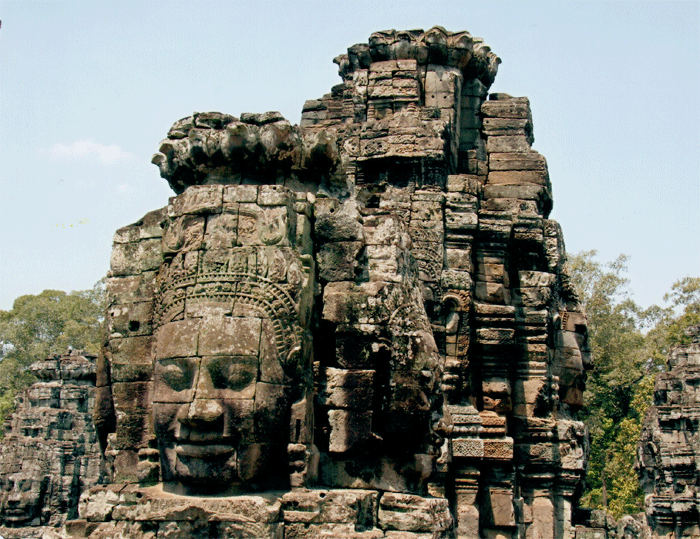
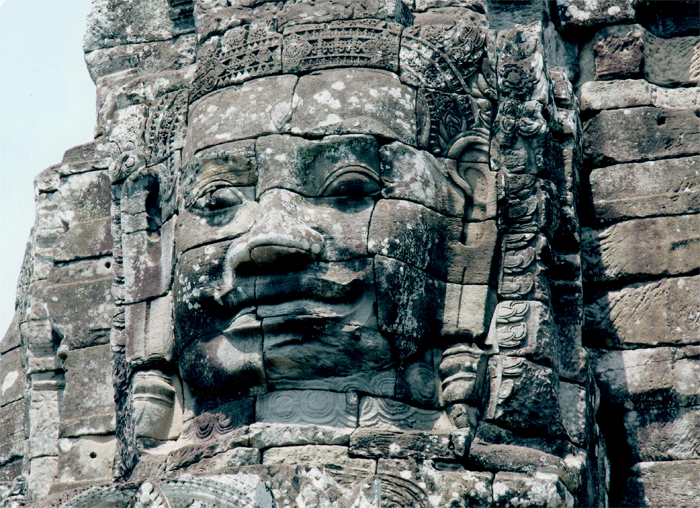
Bayon Temple - Angkor Thom
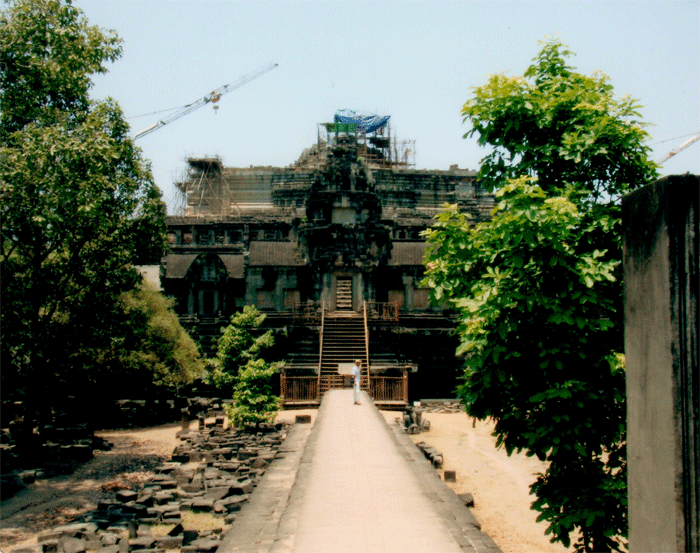
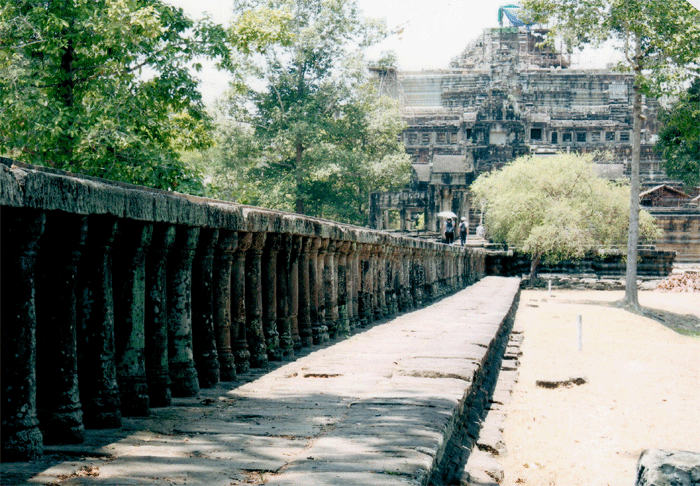
| The Baphuon is a Buddhist temple at Angkor Thom. It is located , northwest of the Bayon. Also called "golden mountain" , the Baphuon is built on an artificial hill. The temple was originally dedicated to Shiva and late converted to a Theravada Buddhist temple. The dating of the temple has been fractious; recent work has shown that it was not built during the reign of Udayādityavarman II, as is popularly reported. In 2015 a French team directly dates four iron crampons integrated into the structure using the AMS Carbon-14 method, revealed the construction was much earlier than thought and can now be considered as the major temple associated with Suryavarman I (1010–1050CE), a ruler which had no temple previously associated with his reign |
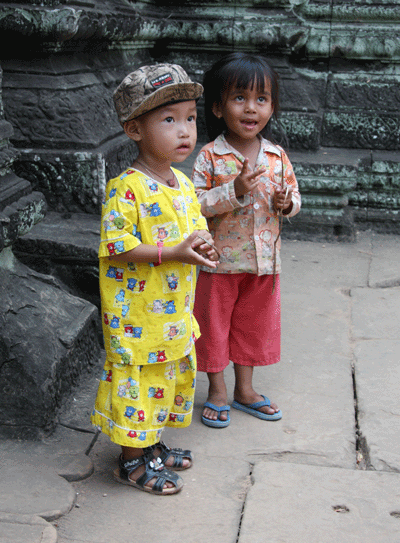
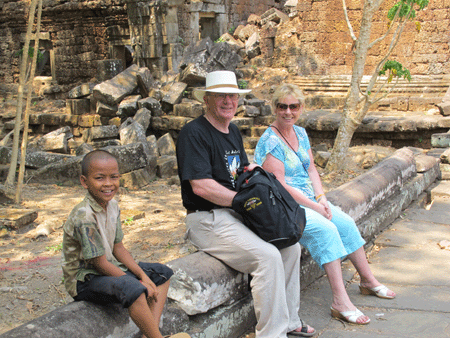
Cambodian Kids
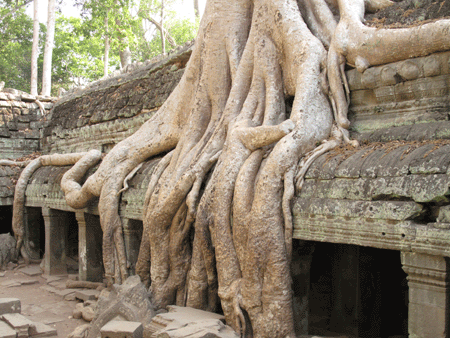
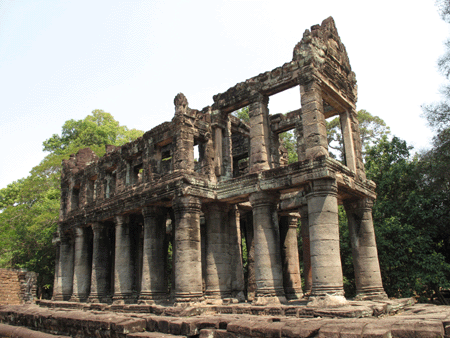
The Library, the only two-storied building, Preah
Khan
|
|